
TEAM GENESIS
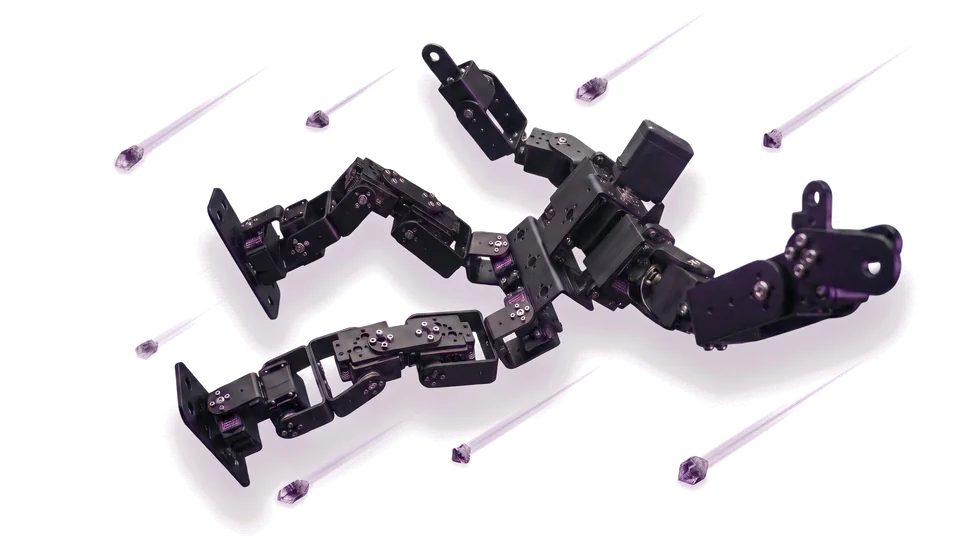
- Full-scale bipedal humanoid platforms engineered at VIT Chennai
- High-torque cycloidal actuation & custom GaN power stages
- 1,000 Hz real-time deterministic control & embodied intelligence

Born at VIT Chennai.
Built without permission.
Team Genesis is an independent collective of engineering students at VIT Chennai. No corporate backing, no institutional budget. We pool our own resources, work outside office hours, and machine parts by hand.
Hardware that typically requires a funded R&D lab is being designed, machined, soldered, and flashed by students. We are not waiting for permission to build the next generation of humanoid robotics. We are just building it.
| Mechanical CAD/FEA | Topological stress analysis, high-strength CNC 7075-T6 milling, custom harmonic joints |
| Power and Hardware | Proprietary GaN field-oriented motor drivers, 48V split-bus architecture, isolated CAN-FD |
| Real-Time Control | 1,000 Hz Zero-Moment Point (ZMP) stability, whole-body inverse kinematics, push recovery |
| Embodied A.I. | End-to-end reinforcement learning policies, 360° LiDAR mapping, spatial depth processing |
Core engineering theses
Bio-Inspired Kinematic Compliance
Human gait requires passive and active elasticity. We develop joint mechanics that emulate biological tendon dynamics, drastically reducing energy consumption during continuous locomotion while protecting actuators from ground impact spikes.
Deterministic 1,000 Hz Real-Time Loop
Physical stability in unstructured environments cannot tolerate non-deterministic compute delays. Our motor telemetry and dynamic balance estimation execute across a dedicated sub-millisecond CAN-FD bus.
Embodied Neural Edge Policies
Sim-to-real reinforcement learning policies trained in physics simulators are deployed on low-power edge tensor silicon for real-time push-recovery, uneven terrain traversal, and adaptive payload stabilization.
Modular Industrial Serviceability
Every joint module, actuator cartridge, and PCB inverter is engineered for rapid field-swappability with standardized mechanical interfaces and keyed high-current harness connectors.

Meet KP-17.
Our first bipedal platform.
KP-17 is Team Genesis's initial physical research platform. Built upon an accessible 17-DOF humanoid kinematic frame, our engineering objective is bringing the hardware to life: integrating custom sensor feedback architectures, low-latency electronics, and closed-loop self-balancing software.
High-torque joint actuation
& position tracking.
Each joint incorporates high-torque digital actuators with precision metal reduction gearing, delivering the requisite joint torque and speed for multi-axis limb positioning and dynamic stance control.
Sensor feedback architecture
& real-time bus.
We are actively developing KP-17's comprehensive sensor feedback architecture, fusing 6-axis IMUs, foot ground-contact sensors, and joint current monitors across a deterministic high-speed CAN-FD communication bus.
Bringing hardware to life
with self-balancing control.
Our primary software sprint focuses on closing the autonomous balance loop. We are implementing dynamic Zero-Moment Point (ZMP) control, whole-body Model Predictive Control (MPC), and sim-to-real reinforcement learning policies to achieve true self-balancing autonomy.
The physical foundation for
all future Genesis bots.
KP-17 is where we test theories, validate electronics, and refine algorithms. The engineering breakthroughs achieved on this platform form the foundation for all upcoming platforms like Project RKP and our competition fleet.
Next-Gen Platforms &
Competition Pipelines.
While KP-17 serves as our core flagship humanoid undergoing active self-balancing control and sensor feedback integration, Team Genesis operates parallel engineering pipelines spanning international competition entries, high-speed autonomous racers, and modular sensor testbeds.
Project RKP
Engineering an accessible, competition-grade service humanoid designed for dynamic manipulation, spatial navigation, and household task autonomy in RoboCup@Home 2027.
Competitive LFR
A competition-grade autonomous line following robot engineered for extreme trajectory tracking, cornering acceleration, and sub-millisecond PID response.
Scalable Robotics Testbed
A modular, high-turnaround test bench for the team to rapidly experiment with, benchmark, and deploy bleeding-edge robotics hardware before integration onto full-scale humanoids.
Project RKP · Technical Architecture
- 01
Cost-optimized bipedal design inspired by leading open-source humanoid architectures
- 02
Integrated dual-arm spatial manipulation for precision object pick-and-place
- 03
Edge compute pipeline executing real-time spatial SLAM and semantic grounding
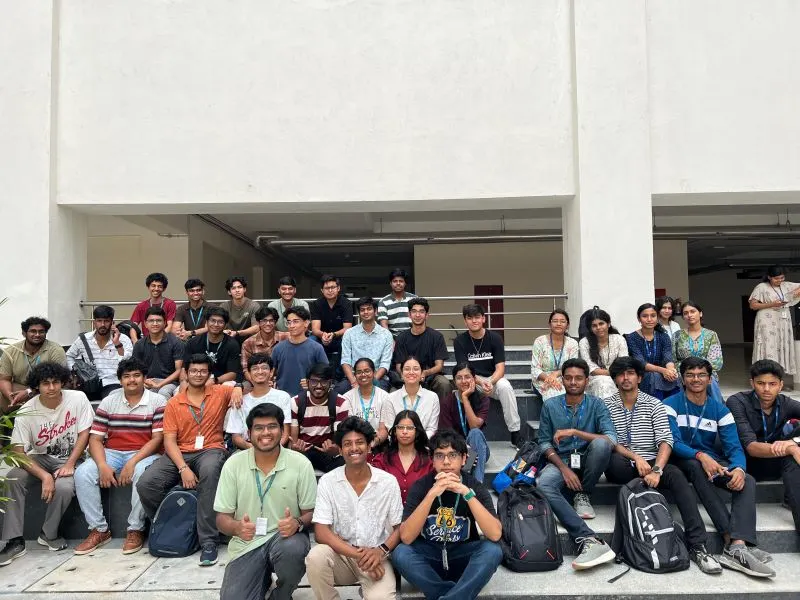
Meet the engineers
behind the machine.
We are an independent collective of engineering students pooling our own resources to build hardware that typically requires corporate backing. Every subsystem is manufactured, soldered, and coded in-house.
Fuel the next generation
of hardware engineers.
You are not just funding a robot. You are getting priority access to a battle-tested pool of mechanical, electrical, and software engineers who have already shipped working hardware under pressure and who are actively entering the job market.
Directly support prototype manufacturing runs, precision machining tooling, and joint research publications with our laboratory.
Deploy your microcontrollers, GaN modules, sensors, or actuators on our active bipedal platform for real-world stress benchmarking. Student-run, honest data. Not a marketing demo.
Sponsors get first-look recruiting access to our graduating engineers. Mechanical designers, embedded systems engineers, control theorists, and AI specialists, all pressure-tested in competitive environments like IIT Bombay Techfest.
Team Genesis Sponsorship & Talent Dossier
Our sponsor brief outlines branding placements, talent pipeline access, live component evaluation opportunities, and our 2025–2026 competition and build milestones. Written for engineering leads and talent acquisition teams alike.